How Much Does It Cost to Hire an App Developer in 2026?
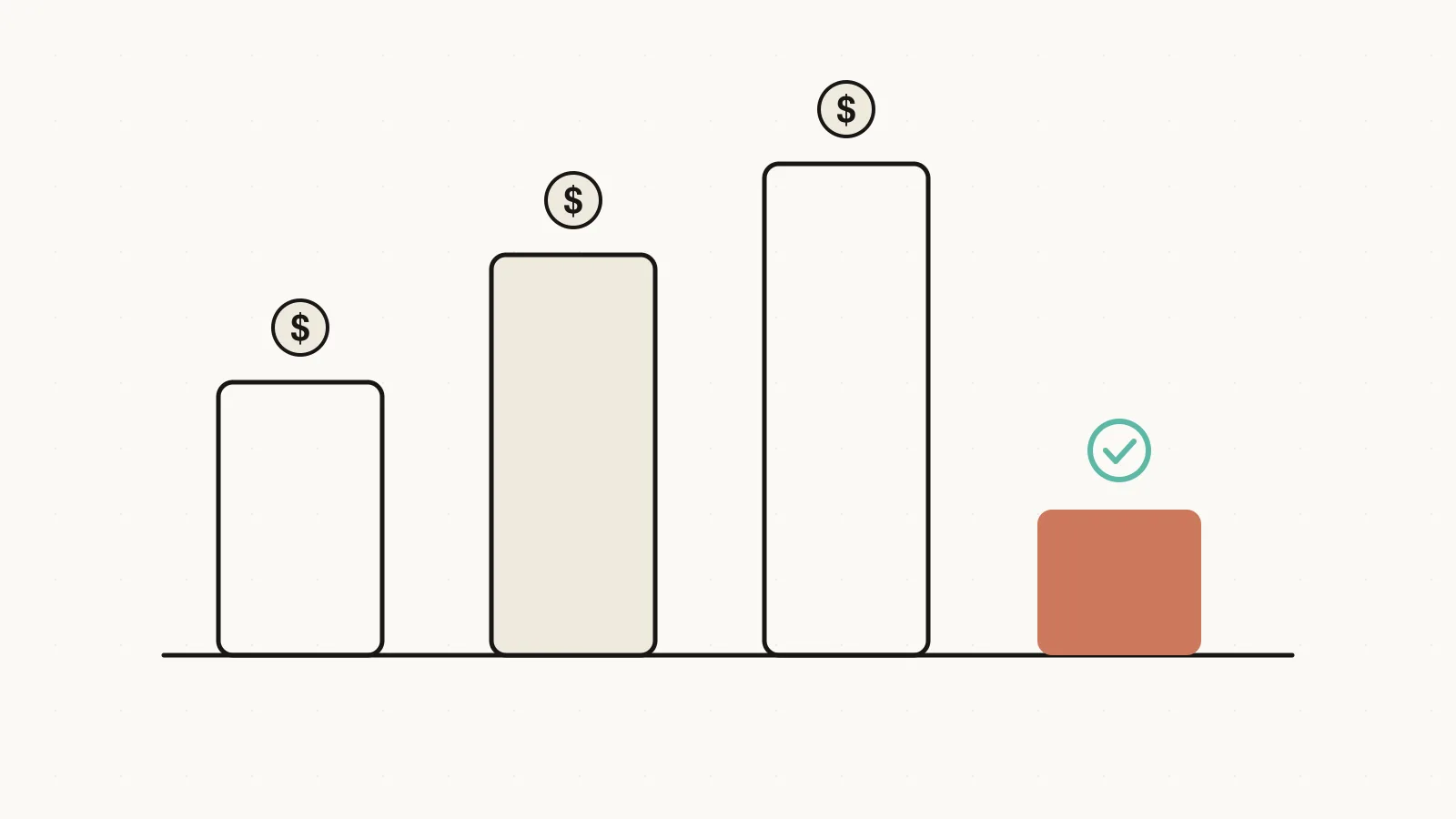
There are four ways to hire an app developer in 2026, and they produce wildly different totals for the same app. Here are the real numbers up front:
| Path | Cost | Timeline | Best when |
|---|---|---|---|
| Freelancer | $20–$150/hour | varies wildly | You can evaluate code and manage the project yourself |
| In-house hire | $150K+/year + overhead | months to recruit | You’re post-validation and building a team anyway |
| Traditional agency | $20K–$120K/project | 3–5 months | You need a large team and enterprise process |
| AI-first fixed-price shop | $4,995–$25,000 fixed | 1–8 weeks | You want a production MVP on a known budget and date |
The rest of this post is what those numbers hide. (If you want a number for your specific app, the 60-second cost calculator is faster than reading on.)
Path 1: Freelancers — $20 to $150 per hour
The range is the story. Offshore generalists start around $20/hour; senior US specialists run $100–$150. A standard MVP takes roughly 400–1,000 developer-hours at traditional pace, so the same project prices anywhere from $8,000 to $150,000 depending on who you hire and how efficiently they work.
The real cost isn’t the rate — it’s the variance. A non-technical founder can’t tell a great freelancer from a confident one until the money is spent, and one person means one point of failure: if they ghost mid-project (a story every founder community tells weekly), you’re hiring their replacement to read their code. You also become the project manager, QA team, and architect by default. We wrote a fuller comparison in freelancers vs. an AI-first agency.
Path 2: In-house hire — $150K+ a year, before you write any code
A senior full-stack engineer in the US runs $150K–$200K+ in salary, plus 25–40% in taxes, benefits, and equipment, plus recruiting: months of sourcing and interviews, or a recruiter fee of 15–25% of first-year salary. If you’re pre-product, add this: an early engineering hire usually expects meaningful equity.
None of that is wasted if you’re post-validation and building a team anyway. As a way to get a first product built, it’s the slowest and most expensive path on this list — you pay for months before the first commit lands.
Path 3: Traditional agencies — $20K to $120K per project
Established agencies quote $20,000–$120,000 for a competent MVP at 3–5 months — the commonly cited market average. You get a team, a process, and an account manager. You also get a cost structure from 2022: hourly billing across PM, design, development, and QA roles, priced as if every line of code were still typed by hand.
Two structural problems. Hourly billing rewards slowness — the incentive runs against you. And industry research puts scope creep in more than half of software projects, which is how a $60K quote quietly becomes $90K. The full teardown is in traditional agencies vs. AI-first.
Path 4: AI-first fixed-price shops — $4,995 to $25,000
The newest tier, and the reason this post exists. AI coding tools now write most of the volume of a codebase — scaffolding, CRUD, integrations, tests — under senior engineer direction and review. The hours collapsed; honest shops repriced. Ours:
| Package | Price | Timeline |
|---|---|---|
| Validate — proof of concept, 1 core feature, deployed | $4,995 | 1–2 weeks |
| Launch — production MVP with payments and admin | $9,995 | 3 weeks |
| Scale — custom and AI-heavy builds | from $25,000 | 4–8 weeks |
Fixed price in writing, 50% upfront / 50% on delivery, code in your GitHub from day one. The scope document states exactly what’s included, which moves scope-creep risk to our side of the table. Full details on the pricing page; the wider market context — every tier, every price band — is in our MVP cost breakdown.
The hidden costs no quote includes
- Scope creep. Over half of hourly projects grow past their quote. Antidote: a written fixed scope, from anyone you hire.
- Maintenance. Plan for 15–20% of build cost per year, or a flat care plan (ours is $499/month). An app with paying users is never “done.”
- The DIY detour. Many founders now build a prototype themselves with AI tools first — genuinely a good idea, with known limits. The trap is launching it: unaudited AI-built apps that fail in production average $40,000+ in rescue costs, the most expensive line item on this page.
How to choose
- Unvalidated idea? Don’t hire anyone yet — vibe-code a prototype for $20–$200/month and put it in front of users.
- Validated idea, need paying users this quarter? AI-first fixed price. That’s a free scoping call and a written quote within 24 hours.
- Post-revenue, building a durable team? Hire in-house — and consider a fixed-price build to bridge the recruiting months.
- Enterprise compliance, multi-quarter roadmap, big team? Traditional agency tier is legitimately your lane.
Frequently asked questions
How much does it cost to hire an app developer per hour? Freelancers: $20–$150/hour depending on region and seniority. Traditional agencies: $40–$99/hour per role, across several roles at once. AI-first shops mostly don’t bill hourly — fixed packages run $4,995–$25,000 per project.
Is it cheaper to hire a freelancer or an agency? A freelancer is cheaper on paper and riskier in variance; an agency is pricier but process-backed. The 2026 answer is that the dichotomy is outdated: AI-first fixed-price shops deliver agency-grade process at closer-to-freelancer totals, because AI removed most of the billable hours.
How much does a whole app cost to build in 2026? DIY with AI tools: $20–$200/month. AI-first agency: $4,995–$25,000 fixed. Traditional agency: $20K–$120K. Enterprise builds: $50K–$300K+. The full tier map explains what moves a project between tiers — or estimate your build in 60 seconds.